
Cormack image courtesy of
Landesarchiv
Baden-Württemberg, Fotograf: Willy Pragher under the
Creative
Commons Attribution 3.0 Germany License.

Today is the birthday of
- Allan MacLeod Cormack (1924-1998).
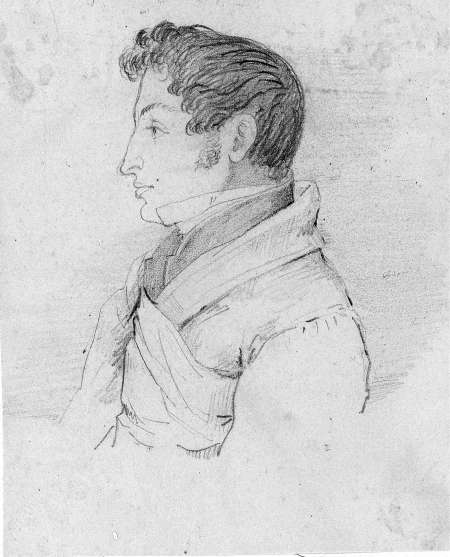
- Johan Jakob Nervander (1805-1848).
Today’s Problem
Find the internal energy \(U\), enthalphy \(H\), entropy \(S\), Helmholtz free energy \(F\), and Gibbs free energy \(G\), for a mole of helium at atmospheric pressure \(P=1.013\times 10^5\,\text{N/m}^2\) and temperature \(T=298\)K.
Answer
We can assume helium is a monatomic ideal gas, so the internal energy is given by
\[U=\frac{3}{2}NkT = \frac{3}{2}(6.022\times 10^{23})(1.381\times 10^{-23}\,\text{J/K})(298\,\text{K})=3717.4\,\text{J}\]
Note that this is independent of the mass of the helium atom. It is the same for all monatomic ideal gases at \(T=298\) K.
The enthalpy is given by \(H=U+PV\). From the ideal gas law we have \(PV=NkT=\frac{2}{3}U\). So the enthalpy is simply proportional to the internal energy \(H=\frac{5}{3}U\).
To get the Helmholtz and Gibbs free energies we need to know the entropy. We can get that from the Sackur-Tetrode equation for the entropy of the monatomic ideal gas.
\[S=Nk\left[\ln\left(\frac{V}{N}\left(\frac{4\pi mU}{3Nh^2}\right)^{3/2}\right)+\frac{5}{2}\right]\]
Plugging in the numbers we get \(S=126\) J/K.
The Helmholtz free energy is given by \(F=U-TS\). Plugging in the numbers we get \(F=-33.8\) kJ.
The Gibbs free energy is given by \(G=H-TS\). Plugging in the numbers we get \(G=-31.4\) kJ.
© 2026 Stefan Hollos and Richard Hollos