Daily Physicist


Home     Archive     Tags     About        RSS
February 24, 2026


Wineland image by James Burrus/NIST, courtesy of AIP Emilio Segrè Visual Archives, W. F. Meggers Gallery of Nobel Laureates Collection under the Creative Commons CC0 1.0 Universal Public Domain Dedication License. Schmidt image courtesy of Markus Pössel under the Creative Commons Attribution-ShareAlike 3.0 Unported License.

Today is the birthday of


February 23, 2026


Cormack image courtesy of Landesarchiv Baden-Württemberg, Fotograf: Willy Pragher under the Creative Commons Attribution 3.0 Germany License.

Today is the birthday of

Today’s Problem

Find the internal energy \(U\), enthalphy \(H\), entropy \(S\), Helmholtz free energy \(F\), and Gibbs free energy \(G\), for a mole of helium at atmospheric pressure \(P=1.013\times 10^5\,\text{N/m}^2\) and temperature \(T=298\)K.

Answer

We can assume helium is a monatomic ideal gas, so the internal energy is given by

\[U=\frac{3}{2}NkT = \frac{3}{2}(6.022\times 10^{23})(1.381\times 10^{-23}\,\text{J/K})(298\,\text{K})=3717.4\,\text{J}\]

Note that this is independent of the mass of the helium atom. It is the same for all monatomic ideal gases at \(T=298\) K.

The enthalpy is given by \(H=U+PV\). From the ideal gas law we have \(PV=NkT=\frac{2}{3}U\). So the enthalpy is simply proportional to the internal energy \(H=\frac{5}{3}U\).

To get the Helmholtz and Gibbs free energies we need to know the entropy. We can get that from the Sackur-Tetrode equation for the entropy of the monatomic ideal gas.

\[S=Nk\left[\ln\left(\frac{V}{N}\left(\frac{4\pi mU}{3Nh^2}\right)^{3/2}\right)+\frac{5}{2}\right]\]

Plugging in the numbers we get \(S=126\) J/K.

The Helmholtz free energy is given by \(F=U-TS\). Plugging in the numbers we get \(F=-33.8\) kJ.

The Gibbs free energy is given by \(G=H-TS\). Plugging in the numbers we get \(G=-31.4\) kJ.


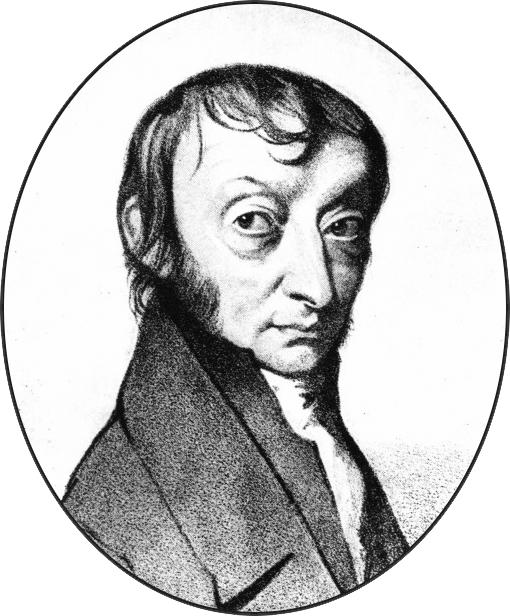
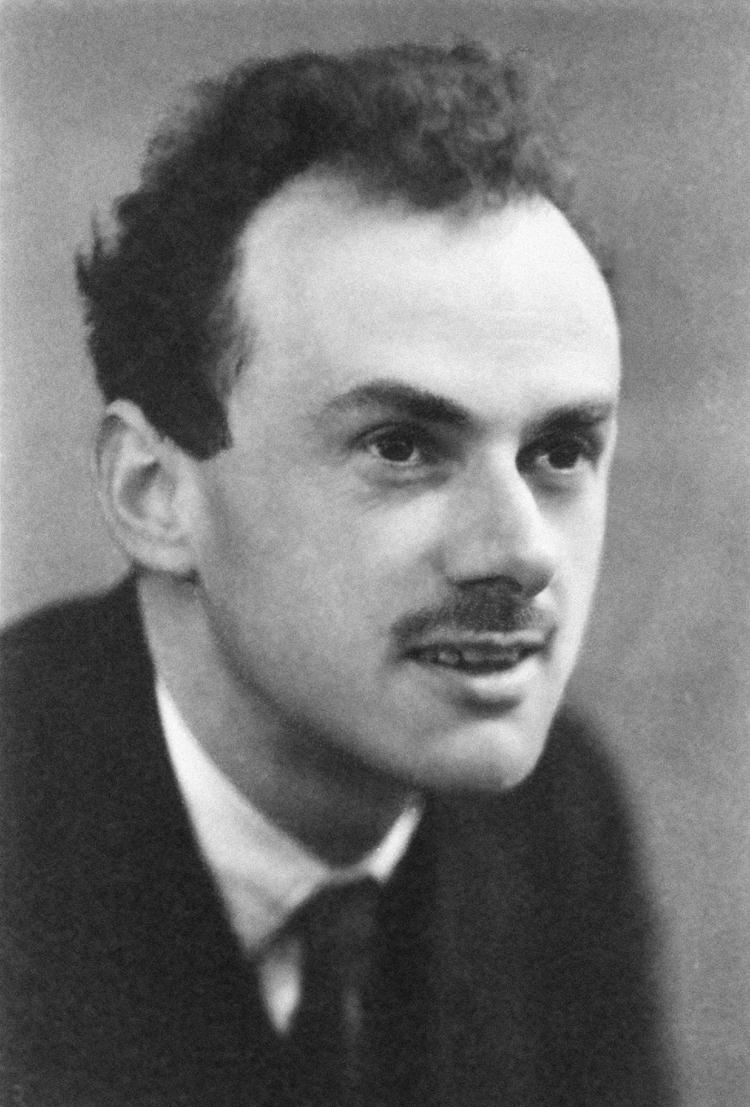
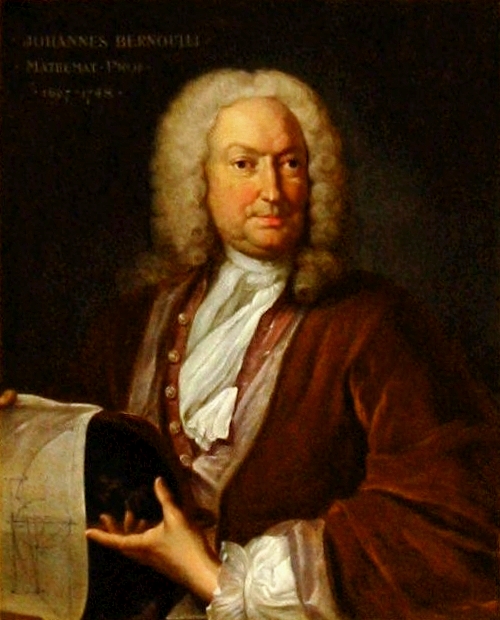
February 22, 2026

Today is the birthday of


February 21, 2026

Today is the birthday of

Today’s Problem

The enclosed volume of a Crookes radiometer is spherical with a diameter of 8 cm. At room temperature (20\(^{\circ}\)C), and a typical pressure of 13 Pa, estimate the number of air molecules in the radiometer.

Answer

Using the ideal gas law, \(PV=nRT\) where \(R=8.315\,\text{J}\cdot\text{mol}^{-1}\cdot\text{K}^{-1}\), we can get the number of moles, \(n=PV/(RT)\)

\[n = \frac{(13\,\text{J}\cdot\text{m}^{-3})(\frac{4}{3}\pi(0.08\,\text{m})^3)}{(8.315\,\text{J}\cdot\text{mol}^{-1}\cdot\text{K}^{-1})(273.15\,\text{K}+20\,\text{K})} = 1.14\times 10^{-5}\,\text{mol} = 11.4\,\mu\text{mol}\]

So the number of air molecules is

\[(1.14\times 10^{-5}\,\text{mol})(6.022\times 10^{23}\,\text{molecules/mole})=6.9\times 10^{18}\,\text{molecules}\]


© 2026 Stefan Hollos and Richard Hollos